
Kickstarting Dog Training Careers After Prison.
Every year, over 50% of formerly incarcerated individuals remain unemployed one year after release. At the same time 2 million dogs enter shelters in the U.S., but less than 1% finding a forever home.
Dog’s Train Home bridges these two challenges with their program’s.
Mission:
Dog’s Train Home helps people rebuild their lives after incarceration by launching dog-training careers. We pair returning citizens with rescue dogs and professional dog-trainer mentors to create a three-way transformation: a life saved, a skill learned, and a future rebuilt.
Want to support a second chance? Donate now!
“Our goal is to help build future dog training careers by training rescue dogs through mentorship and opportunities ”
Do You Need A Dog Trainer?
Find A Dog Trainer



Organization History
Dog’s Train Home was founded to address the critical gap between reentry and employment for justice-involved individuals returning to their communities. Many individuals complete vocational and dog training programs while incarcerated but face barriers to continuing that training or securing employment upon release, often leaving those skills unused.
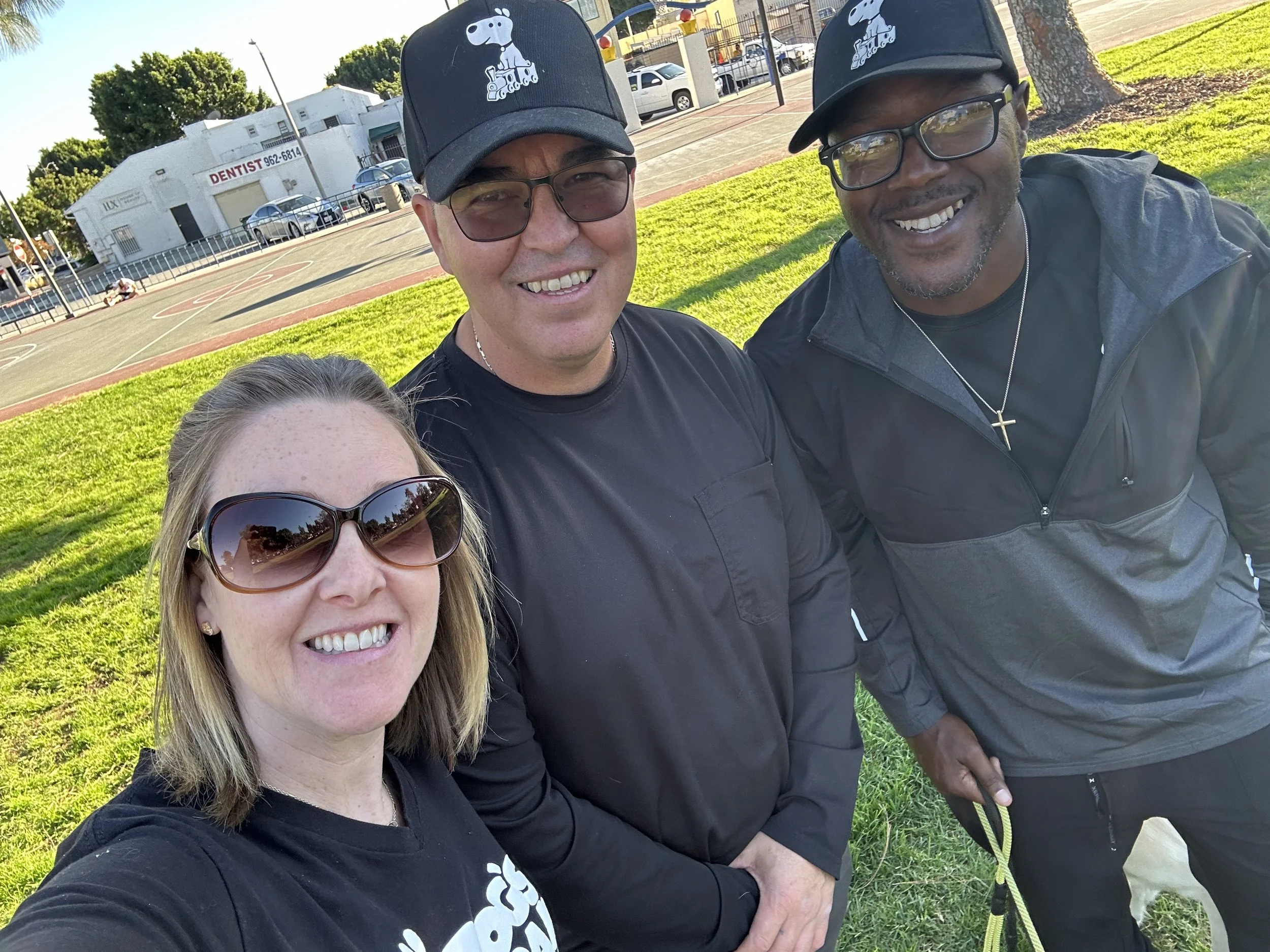
The program’s origin began when Vix Lyttle adopted a dog named Eli and met Isaac DeLaRosa, the trainer who had earned his professional dog-training qualifications while incarcerated. Through Isaac, Vix learned firsthand about the gap between the in-prison training programs and the real-world workforce. She saw how talent, dedication, and certification often went unsupported once someone came home, creating a loss not only for the returning citizen but for the animal-welfare and training industries as well.
Dog’s Train Home responds to this gap through a structured education and workforce training model that builds on dog-training experience gained in prison. Participants receive hands-on professional training with rescue dogs, mentorship from experienced trainers, and support transitioning those skills into real-world employment pathways. The program is designed to ensure prior training is not lost and instead becomes a foundation for stable work, responsibility, and successful reintegration.